
When Should You Call a Water Damage Restoration Company?
Knowing when to call a water damage restoration company can make a major difference after a leak, overflow, or flood. A small spill on a hard surface may be manageable when caught immediately. Water that reaches flooring, drywall, insulation, or other building materials often needs professional attention.
Stopping the source is important, but it does not mean your property is dry. Water can travel underneath floors and behind walls where it is difficult to see. A restoration professional can determine how far the moisture traveled and what needs to be dried, cleaned, or repaired.

What Does a Water Damage Restoration Company Actually Do?
A plumber and a water damage restoration company handle different parts of the problem. A plumber may repair a burst pipe or leaking fixture. A restoration company addresses the water left behind and the resulting damage. Professional restoration commonly includes water removal, structural drying, cleaning, and repairs. The exact process depends on the water source, affected materials, and extent of the damage.
Water Extraction and Emergency Water Removal
The first step is removing standing water. Professional extraction equipment can remove water more efficiently than towels or a household wet/dry vacuum. Technicians also look beyond visible puddles because water can soak into carpet, padding, flooring, and other porous materials. Even after the source is stopped, emergency water removal may be needed.
Structural Drying and Dehumidification
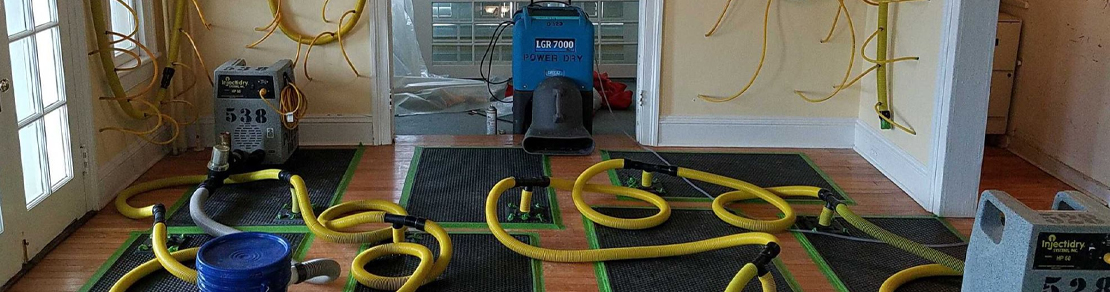
Removing standing water does not remove all moisture. Air movers increase evaporation, while professional dehumidifiers remove moisture from the air so wet materials can continue drying. Technicians may also use moisture meters to monitor walls, flooring, and other materials. Drying decisions are based on measured conditions rather than whether a surface simply looks dry. Learn more about how dehumidification works after water damage.
Cleaning, Sanitizing, and Final Restoration
Cleaning requirements depend partly on the water source. Category 1 water begins from a relatively sanitary source, Category 2 has significant contamination, and Category 3 is grossly contaminated. Sewage and some floodwater require greater precautions than a clean-water leak. Depending on the damage, some materials can be cleaned and dried while others require replacement. Repairs may include drywall, flooring, insulation, trim, and other building materials.
Signs You Need to Call a Water Damage Restoration Company Immediately
The Water Involves Sewage, Floodwater, or a Backed-Up Drain
Contaminated water requires added safety precautions. Avoid direct contact and seek professional help with cleanup.
Water Has Been Sitting for an Extended Period
Wet materials should be dried quickly. EPA guidance recommends drying wet materials within about 24–48 hours when possible to help prevent mold growth. Slow appliance, roof, and hidden plumbing leaks can be especially difficult because they may go unnoticed.
You See Mold, Warped Flooring, Bubbling Drywall, or Other Visible Damage
These signs can indicate that moisture has reached materials beneath the surface. A professional water damage assessment can help identify moisture that surface drying may miss. Drywall, carpet and padding, insulation, subfloors, ceilings, and wood can hold moisture after visible water disappears.
When You Can Wait — and When You Definitely Cannot
Not every spill requires the same response. Consider the water source, amount involved, affected materials, and how long the area has been wet.
Call Immediately
- Sewage or contaminated water
- Wet drywall, flooring, ceilings, or insulation
- Unknown water source
- Significant standing water
- Multiple rooms affected
May Have a Short Window
- Small, isolated clean-water spill
- Nonporous surface only
- Source stopped immediately
- Very limited amount of water
- Minor appliance spill caught immediately
A Small, Isolated Clean-Water Incident May Have a Short Window
A minor clean-water appliance overflow that is stopped immediately and remains on a small, nonporous surface may not require the same response as a flooded room. Remove the water, dry the area, and continue checking for moisture.
For example, minor dishwasher overflow water damage may be easier to address when caught right away.
These Situations Should Not Be Treated as DIY Cleanup
Visible water is only part of the problem. Moisture can travel beneath flooring and into walls. Professional moisture readings help technicians determine whether affected materials are actually drying.
If you do not know where the water came from, how far it traveled, or what became wet, that uncertainty itself is a good reason to request an assessment.
The Hidden Risk Is Moisture You Cannot See
Visible water is only part of the problem. Moisture can travel beneath flooring and into walls. Professional moisture readings help technicians determine whether affected materials are actually drying.
If you do not know where the water came from, how far it traveled, or what became wet, that uncertainty itself is a good reason to request an assessment.
What to Look for in a Water Damage Restoration Company
If you have decided to call a professional, knowing how to choose a water damage restoration company can help you narrow your options.
IICRC Certification and Licensed Technicians
Look for training and certifications from recognized organizations such as the IICRC. Ask how technicians assess and monitor water damage.
24/7 Emergency Response Availability
Water emergencies can happen at any hour. Ask about emergency availability and how quickly the company typically dispatches a team.
Direct Insurance Billing and Documentation
The best water damage restoration company should document affected areas, moisture readings, and work performed. These records may also help when communicating with your insurance carrier.
Common Mistakes Homeowners Make After Water Damage
Waiting to See If It Dries on Its Own
Surfaces can feel dry while moisture remains underneath flooring or inside walls.
Relying Only on Household Fans
Professional drying may require dehumidification and moisture monitoring in addition to air movement.
Starting Demolition or Cleanup Before Documenting the Damage
When safe, photograph affected areas and belongings and contact your insurer promptly. Do not delay necessary emergency mitigation.
Ignoring the Source of the Water
You may also need a plumber, roofer, appliance professional, or another qualified trade to correct the original problem.
Assuming the Job Is Finished When the Surface Looks Dry
Ask how technicians use moisture readings to determine when affected materials are dry.
Frequently Asked Questions
How long does water damage restoration take?
Will homeowners insurance cover water damage restoration?
Can I stay home during water damage restoration?
How much does a water damage restoration company charge?
When in Doubt, Have the Moisture Assessed
Don’t decide to call a professional based only on how much water you can see. Contaminated water, standing water, wet building materials, prolonged exposure, visible damage, and uncertainty about where moisture traveled are all reasons to seek help.
Northeast Power Dry provides 24/7 water damage restoration assistance for residential and commercial properties in New Jersey. If you are unsure what your property needs, contact NE Power Dry for professional guidance and next steps.
Comments are closed.
